Case study · Mount Vernon · 2018–2024
An Immersive Virtual Mount Vernon, Used in Classrooms Nationwide
A custom-built virtual tour built on HDR photography, layered stories, and curatorial commentary — wrapped in a full set of classroom lesson plans and ported to VR for Oculus and Google Cardboard. Reached 4M+ visitors with an 18-minute average dwell time — museum-grade engagement for a website experience.
The brief
Build an online estate that lets anyone — student, teacher, researcher, or armchair traveler — walk Mount Vernon’s grounds, peek into the rooms, and follow Washington’s stories without ever leaving home. Make it good enough that a school district could use it instead of a field trip when the field trip wasn’t possible.
What we did
HDR photography of the estate
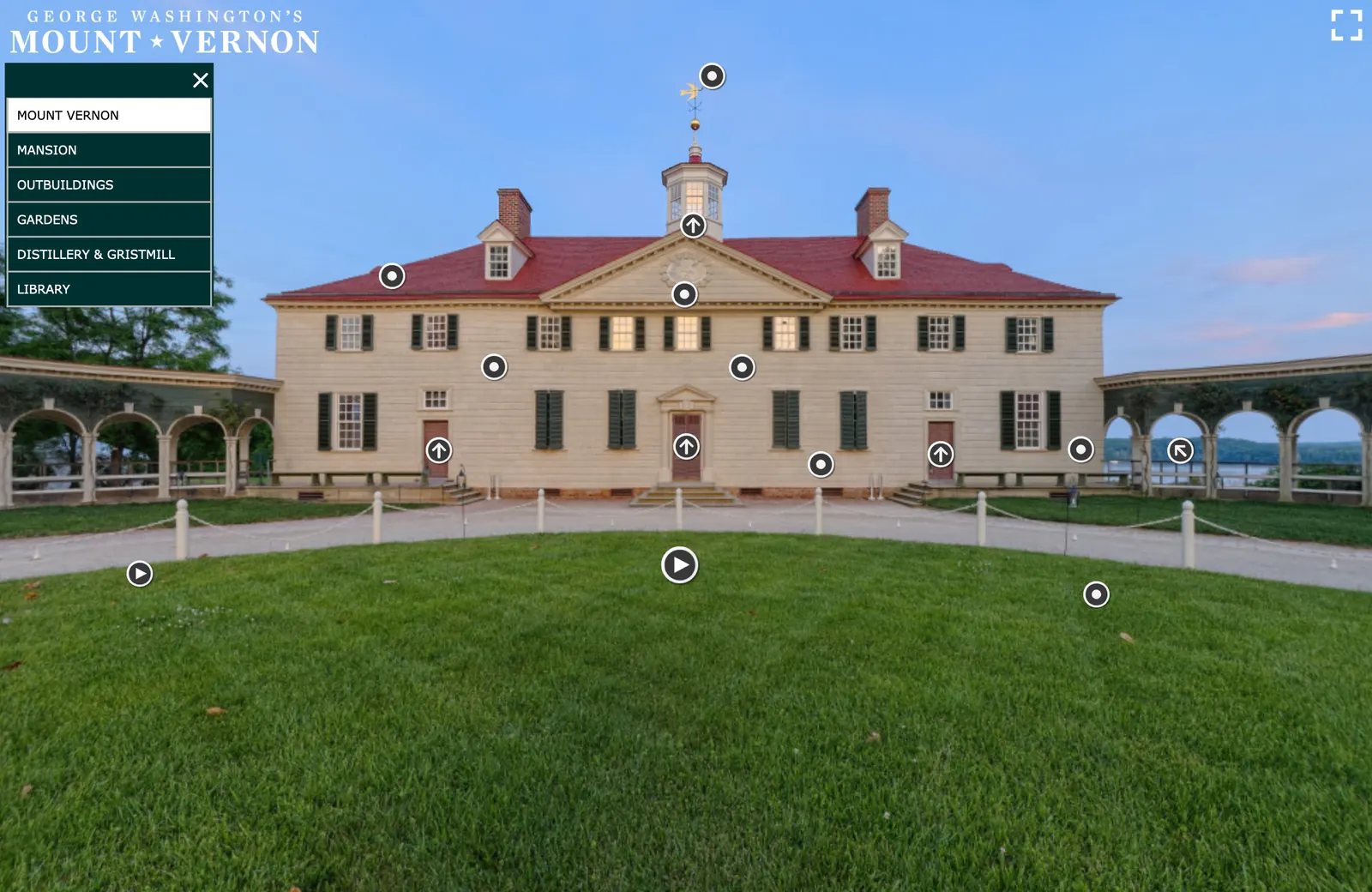
We shot every major site — the Mansion, the outbuildings, the gardens, the distillery, the gristmill, the library — in vivid HDR panoramic photography, capturing the place under the kind of light most visitors never get to see it in.
Stories layered on the photography
Each hotspot is a doorway: into a video, a primary-source document, a piece of curatorial commentary, a Washington letter, or a deeper room you can step inside. The interaction loop kept people exploring for an average of 18 minutes per session — a number that puts it in the top tier of any cultural-institution digital experience anywhere.


Built for classrooms — with a lesson-plan layer
The tour was designed with teachers in mind from day one: clean navigation, accessible language toggling across five languages, and an interpretive depth that supports a real lesson plan. We didn’t stop at the experience itself — we built a full set of teacher resources around it: scaffolded activity sheets for elementary, middle, and high school; primary-source prompts; and classroom activities tied to specific stops on the tour. Those lesson plans still live on Mount Vernon’s site today, and the tour became a fixture in social studies curricula nationwide and a quiet workhorse for schools that couldn’t bring kids to Virginia.
Browse the Virtual Tour teacher resources & lesson plans on mountvernon.org →
Ported to VR — Oculus & Google Cardboard
We took the same estate into virtual reality, porting the experience to Oculus headsets and to Google Cardboard so a classroom with a stack of cheap viewers and a few phones could stand inside the Mansion. The HDR panoramas that anchored the web tour translated naturally to a head-tracked, 360° view — the same photography, the same stories, now wrapped around the viewer instead of framed on a screen. It put a genuinely immersive Mount Vernon within reach of school budgets that would never see a VR studio.

Why it mattered
An 18-minute dwell time on a website is museum-grade engagement — proof that depth and craft online can rival the visit itself.
For a sector that often treats digital as a brochure, the virtual tour was a working argument for what a great cultural-institution digital product can be — not a marketing asset, but a destination in its own right.