Case study · Mount Vernon · 2022 · Gold Telly Award
The 10-Minute Orientation Film That Replaced 30 Minutes of Friction at the Front Door
When you visit a 180-acre historic site for the first time, the question isn’t whether you should watch the orientation film — it’s whether you can afford to. The new Mount Vernon orientation film, produced with Wide Awake Films, replaced a sprawling 30-minute legacy production with a tight, 10-minute, 4K film designed to do one thing well: give every visitor exactly what they need to make their on-site time count. It won the 2022 Gold Telly Award.
The brief
For years, Mount Vernon’s orientation experience was a 30-minute legacy film: roughly three minutes of actual orientation followed by twenty-seven minutes of loosely organized Washington biography that didn’t even cover his presidency. It played in two theaters that ran on rotation, so guests routinely had to wait up to 15 minutes to even get in — before sitting through the half-hour.
The result was predictable. School groups, who get 1.5–2.5 hours at the estate, skipped the film entirely. Other guests — families on a half-day visit, tour groups on a clock, anyone trying to get out to the grounds while the weather held — either skipped it too, or sat through it and lost a third of their visit to the wrong thing. The "orientation" wasn’t orienting anyone.
The brief: replace it with a single, short film that gives every visitor exactly what they need — about Washington, about Martha, about the Mount Vernon Ladies’ Association who saved the place, about the enslaved community whose lives shaped it — to hand cleanly off to the interpreters waiting on the grounds and in the Mansion.
Watch the film
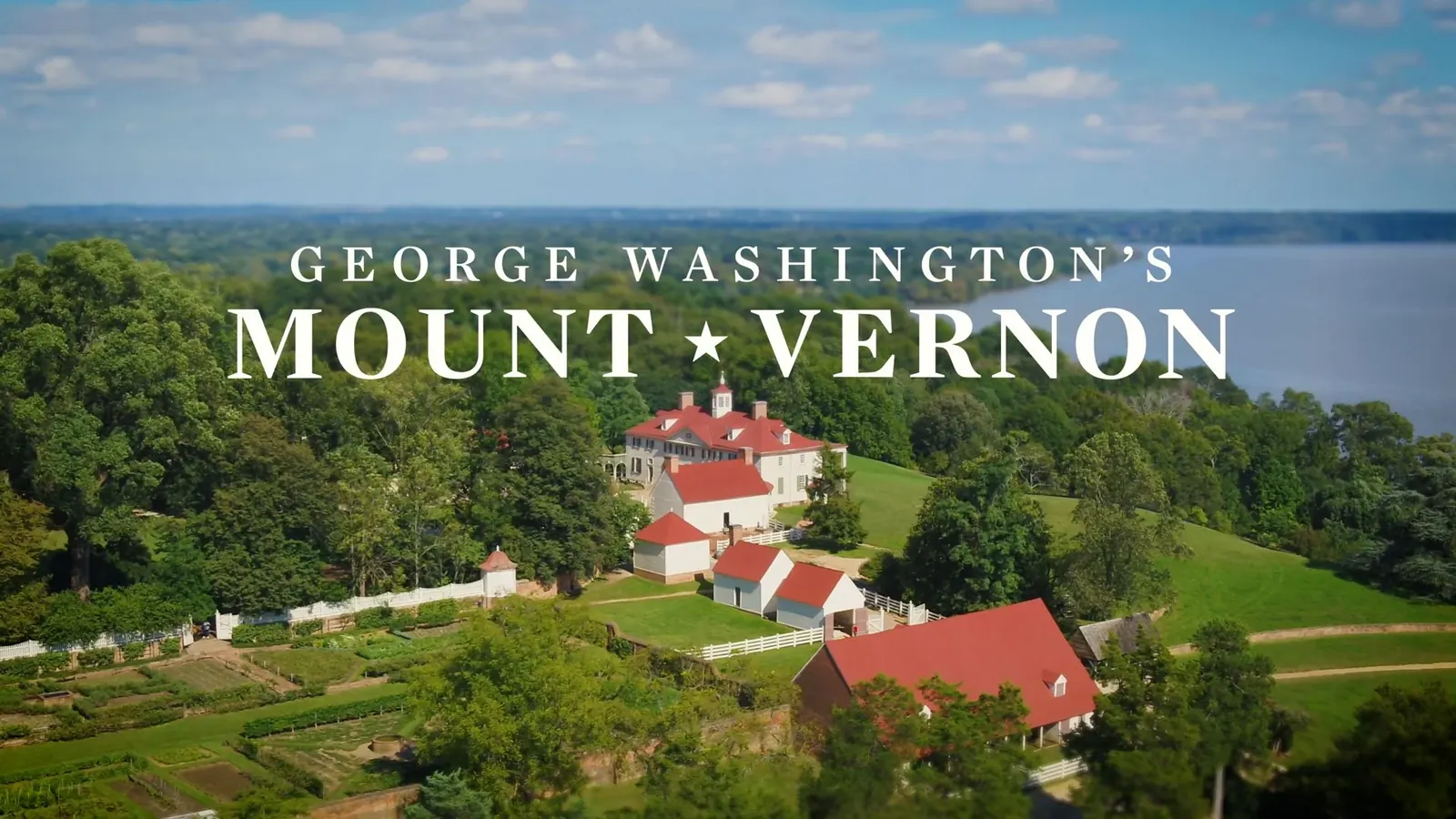
George Washington’s Mount Vernon — Orientation Film
What the film actually does
Where the legacy production tried to be a biography, the new film is an orientation in the literal sense — it orients you to the place, the people, and the day ahead. Its job is to deliver the foundation, then hand off cleanly to the on-grounds interpreters who do the deep dives.
- George and Martha Washington as residents, not just figures — framing the Mansion you’re about to walk through as a home.
- The estate as a system — the Mansion, the gardens, the distillery, the gristmill, the working farm, the museum & education center, and the Library, with quick context on how each one connects to the Washingtons’ lives.
- The Mount Vernon Ladies’ Association — America’s oldest national historic preservation organization, founded in 1853 by Ann Pamela Cunningham, who saved Mount Vernon when the federal government would not.
- The enslaved community at Mount Vernon — explicitly recognized, with cues to where on the estate visitors can connect with that history.
- Practical wayfinding — a brief, cinematic tour of the 180-acre property so visitors arrive at the front gate already knowing where they want to go.


Distribution: not just a theater anymore
The legacy 30-minute production existed in exactly one place: two on-site theaters that played it on rotation. The new film was designed from the start to live in three different places that all reinforce each other:
In the Ford Orientation Center
Plays at the start of the visitor experience, on a tight 10:30 loop. New guests get a complete orientation in the time it used to take to find a seat.
Public on YouTube
Permanently free and embeddable. Anyone considering a visit can watch it before they go — or in lieu of going, if they live too far away.
Pre-Visit Drip & Tour-Operator Use
Embedded in Mount Vernon’s pre-visit email sequence and offered to tour operators — groups can show it on the bus and skip the on-site theater entirely.
On set


What we did
Started with the audience, not the institution
Most legacy museum films are built around what the institution wants to say. This one was built around what the visitor needs to know in the first ten minutes of their day. The script was written backwards from the on-grounds interpreter handoff — what do they assume guests already understand when guests walk up? — and the runtime was set before a frame was shot.
Production at film quality, with the estate as the location
Mount Vernon and Wide Awake Films shot in 4K across the Mansion, the estate, the gardens, the distillery, and the Library — working around the estate’s operating hours so visitors never saw a film crew. Cutting-edge 3D animated maps were layered over the live footage to make 180 acres feel legible from a single screen.
Recognized the enslaved community explicitly
The legacy film handled slavery glancingly, if at all. The new film names it as part of the institution’s story and explicitly directs visitors to where, on the estate, they can engage with that history — a deliberate, curatorial choice that matched Mount Vernon’s broader institutional priorities.
Made it ship beyond the theater
The film’s public release on YouTube and its use in pre-visit email and by tour operators were planned from day one, not retrofitted afterward. Treating an orientation film as a piece of distributable content — not a building fixture — was the strategic shift that made the production worth doing at all.
Our goal for this new film was to provide our guests with the highest quality experience when visiting George Washington’s Mount Vernon. This prestigious award signals that we succeeded. This innovative film provides our guests with a brief but in-depth overview of how to navigate the 180-acre property and its rich history so visitors can fully experience all that Mount Vernon has to offer. — Douglas Bradburn, President and CEO, George Washington’s Mount Vernon (2022 Telly Award announcement)
Why it mattered
The best institutional film isn’t the longest one. It’s the one that leaves the most time for the actual visit.
The orientation film replaced a thirty-minute friction point at the front door with a ten-minute experience that actually does what its name says. School groups stopped skipping it because they finally had time for it. Tour operators stopped working around it because they could now use it. Online viewers became pre-qualified visitors, arriving on-site already knowing what they wanted to see. And the Gold Telly was the working proof that institutional orientation, done with the same craft you’d give a feature production, is a discipline worth taking seriously.
Press: Mount Vernon — Gold Telly press release · Wide Awake Films — Orientation Film
Media gallery


