Case study · Theodore Roosevelt Presidential Library · 2026
Selling a Trip to the Badlands
Nobody is ever “in the neighbourhood” of Medora, North Dakota. Every spot, every photograph and every page of the launch campaign had to sell a journey rather than a ticket — and then tell people honestly when there was no room left.
The brief
A destination institution has a fundamentally different marketing problem to a city museum. Nobody walks past. Nobody drops in on a rainy Saturday. Every single visitor made a plan, booked a flight or drove several hours, and arranged somewhere to sleep.
That means the campaign isn’t selling admission. It is selling a trip — and the conversion event happens weeks before anyone reaches the building.
Two registers, five spots
The creative splits deliberately. Half of it establishes who Roosevelt was, in his own words. The other half shows what a day here actually feels like. Neither works alone: the brand spots give people a reason to care, and the experience spots give them a reason to come.
“Arena”
John F. Kennedy reading Roosevelt’s “Man in the Arena.” One president reading another, with no voiceover explaining why that’s remarkable. The most-quoted passage Roosevelt ever wrote, delivered by someone the audience already trusts.
Photography for a place people can’t picture
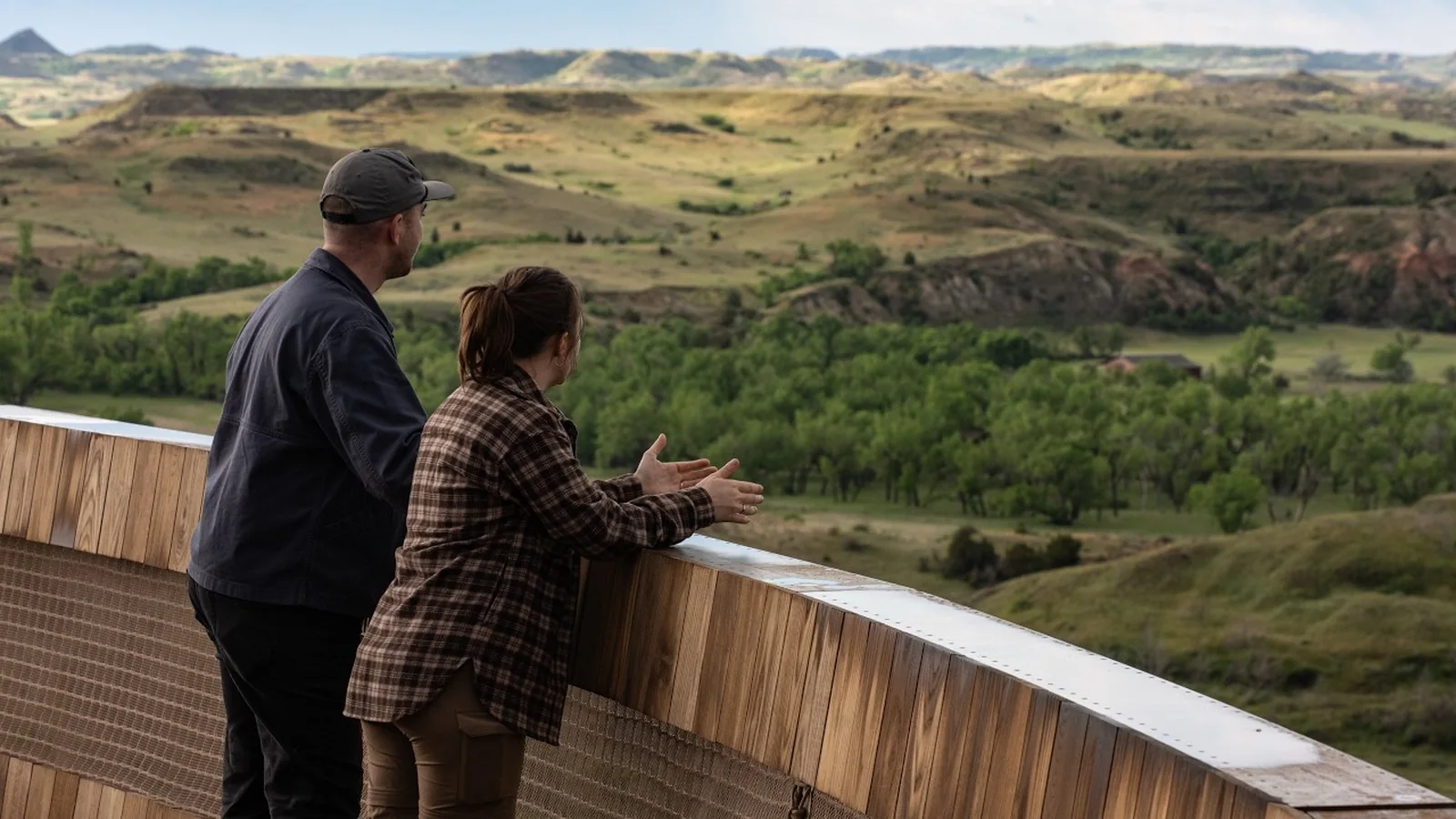
Most Americans have never seen the North Dakota Badlands and cannot summon a mental image of them. That is a marketing problem before it is anything else — you cannot want to go somewhere you can’t visualize.
So the lifestyle photography was commissioned ahead of opening, which had two effects. It gave travel editors usable art at the point in their production calendar when they were building summer packages — months before the building could have been photographed with real visitors in it. And it gave the campaign a library of images showing people doing specific things in a specific landscape, rather than the empty architectural shots that make a new building look like a rendering of itself.

Plan Your Visit as conversion architecture
The Plan Your Visit page is where the campaign lands, and it is built as a hub rather than a brochure — seventeen subpages covering hours, directions, tickets, itineraries, lodging, dining, accessibility, the national park and the town of Medora.
Some details that do real work:
- A seasonal hours widget that selects itself. Four tabs carrying real date ranges, auto-selecting the current season, because a visitor planning in February should not have to work out which of four schedules applies.
- Pricing stated up front — $26 adult, $16 youth, free under three, with senior, military, student and group rates. No “from” pricing, no click-through to discover the real number.
- An honest dwell time. The page says three and a half hours in the exhibition plus another hour on the boardwalk. Understating that would fill more mornings and produce more disappointed afternoons.
- Where to stay and where to eat, including businesses the Library doesn’t own, in towns the Library isn’t in.
Telling people not to come
The decision I’d defend hardest is the one that costs conversions on purpose. The page tells visitors that August is Medora’s busiest month, that walk-up tickets may not be available, that Medora hotel rooms sell out, and that they should consider Belfield, Beach, Dickinson, Watford City or Bismarck-Mandan instead.
Every one of those sentences reduces same-session bookings. All of them are correct.
A visitor who drives four hours and cannot get in is a worse outcome than a visitor who books next month.
A destination institution’s marketing is only as good as its worst arrival experience, because that visitor tells everyone. Publishing the bad news in advance is cheaper than absorbing it at the admissions desk — and it is the thing that makes the rest of the page credible.
What I’d carry forward
- Sell the trip, not the ticket. For a destination, the conversion happens weeks out and involves flights and hotels you don’t control.
- Shoot before you open. Travel media work on long lead times; art that arrives at opening arrives late.
- Two registers, not one. Brand spots earn the interest; experience spots convert it.
- State the price and the duration honestly. Both are load-bearing for a visitor building a day around you.
- Publish the bad news. Sold-out dates and full hotels, said early, buy trust you cannot otherwise purchase.
Why it mattered
The Library averaged roughly 1,900 visitors a day with more than half of days sold out, and passed 40,000 visitors within three weeks, against a projection of 150,000–200,000 a year.
Those people did not wander in. Every one of them made a plan.
Spots: the Library’s Commercials playlist. Related: the lifecycle program these visitors enter · the earned media campaign